Assetto Corsa Rally boasts a wealth of vehicles from the history of the rallying world. From the pre-World Championship Group 2 machines to the modern Rally2 machines and a bit of everything in between, you’re spoiled for choice in the latest addition to the Assetto Corsa franchise, and the list is only going to grow from here.
World Rally Car
The World Rally Car formula first appeared in 1997 as a 2-litre cost-effective ruleset after the burgeoning costs of Group A. It saw the advent of new trick technologies and saw legends such as Colin McRae, Carlos Sainz, and Richard Burns take on new stars such as Marcus Gronholm, Petter Solberg, and, of course, Sébastien Loeb.
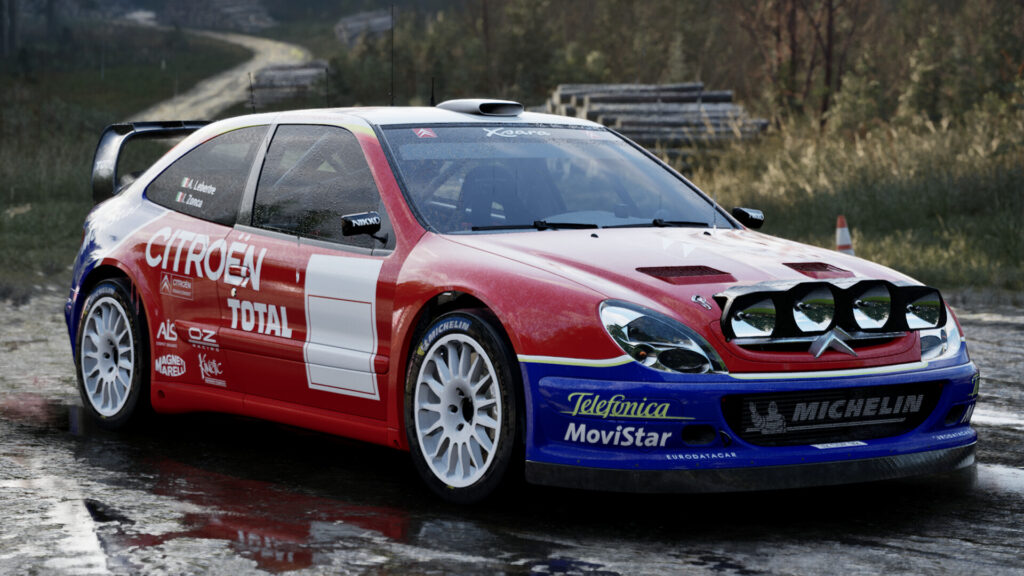
Citroën Xsara WRC
One of the most dominant cars in WRC history at the hands of Sébastien Loeb, Citroën’s Xsara WRC started off life as the giant-killing F2 Kit Car that beat its four-wheel-drive rivals to win twice in a row in 1999. The front-wheel-drive machine became the last two-wheel-drive event winner with consecutive wins in Catalunya and Corsica, starting a strong tarmac pedigree that came to define the French marque’s run in the WRC.
The Xsara slowly built up to full-time competition from more humble part-time beginnings, with victories as early as 2001 with Jesús Puras before Loeb’s three titles in a row between 2004 and 2006 – the third despite Loeb missing the end of the season with a broken arm. A uniquely dominating drive came in Corsica in 2005, where Loeb won every single stage.
The 2-litre I4 engine chucks out just over 300hp, delivered efficiently to a four-wheel-drive system that boasts three differentials that can be as competitive on loose and sealed surfaces alike. It still picked up podiums as late as 2009 at the hands of 2003 World Rally Champion Petter Solberg, and featured in the final season of 2-litre regulations with touring car ace Yvan Muller on his home Alsace Rally – which you can also enjoy in Assetto Corsa Rally.
Rally2
Rally2 is not the top of the FIA’s rallying pyramid, but it is by far the most competitive class. Using similar 1.6L engines to the top Rally1 class without the trick aerodynamics and complex mechanical parts, it often sees close title battles at national and international levels. The European Rally Championship, for example, recently had a 2-year run without a repeat winner as Poland’s Mikołaj Marczyk won the title without winning a single event.
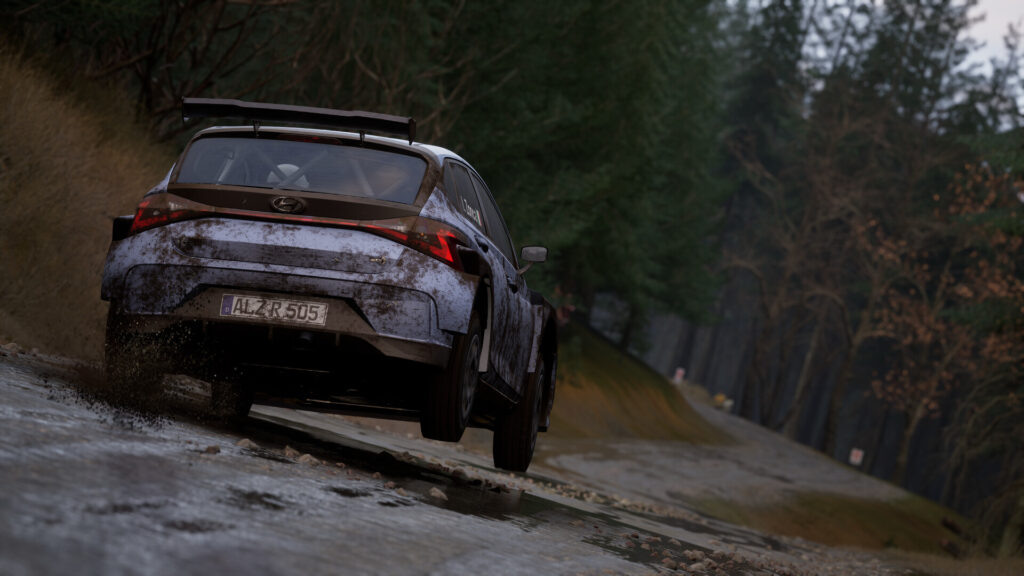
Hyundai i20N Rally2
Hyundai’s Rally2 machine is arguably one of the hottest of hot hatches on the market. Whilst it is yet to win the world championship for Rally2 machines, with one-time WRC event winner Hayden Paddon behind the wheel, it managed to win the European Rally Championship in both 2023 and 2024. This helped make Paddon the first consecutive champion in the Rally2 era, in a series that went 4 years without a driver winning consecutive events.
Rally2 machines produce roughly 300hp from a 1.6-litre engine, with Hyundai’s i20N doing so from an I4 engine that is similar to the ones you can find in the top class of rallying. This goes to a 5-speed gearbox, with many of the parts on the i20N Rally2 being shared between both the tarmac and gravel specifications as a means of reducing costs.
ŠKODA Fabia RS Rally2
In the world of Rally2, as with the R5 and S2000 classes before it, there’s one manufacturer who time and again stands head and shoulders above the rest. ŠKODA has, time and again, made the best-selling and winningest cars in class, and the Fabia RS Rally2 is more of the same.
Utilising the latest in VW’s MQB Platform, the Fabia RS won WRC2 on its first attempt in 2023 and the Challenger class in 2025, as well as placing on the podium in every season of the class since its debut. It also carries the 2025 European Rally Championship title with Miko Marczyk, and makes up a fair share of the 700 active ŠKODA Rally2 cars, as well as the 24 world, 32 continental and 172 national titles claimed in Czech machinery.
As with its rival in the Hyundai i20N Rally2, the ŠKODA Fabia RS Rally2 produces roughly 300hp from its 1.6-litre engine. The main differences between the two cars are in the parts that make up the rest of the car, with different suppliers for components such as the suspension and brakes, meaning that the two cars handle slightly differently.
Characteristics can vary from surface to surface too, with one car potentially able to produce more understeer on tarmac yet more oversteer on gravel. It’s worth testing both cars and fine-tuning your setup parameters to find what combination works best for you.
Rally4
Rally4, previously known as R2 before the shakeup of the rallying pyramid, is the top class of two-wheel-drive rallying at an international level. These small and lightweight cars can often outperform their more powerful Rally3 rivals in the right hands.
Peugeot 208 Rally4
Peugeot’s 208 Rally4 car is a front-runner in modern two-wheel-drive rallying. Rally4 is the top class of front-wheel-drive cars on the rallying pyramid, with the 208 powered by a 1.2-litre turbocharged I3 engine. It packs plenty of punch, with just over 200hp going to the front wheels at the peak of the power curve.
The 208 Rally4 is famous for being the most recent two-wheel-drive car to score points in a WRC event, with second-generation Japanese talent Hiroki Arai taking the car to 10th place in 2023’s season-ending Rally Japan against the more-powerful Rally2 and Rally1 Hybrid machinery on offer from the likes of Hyundai. It might not have the same power or cornering as the higher rungs of the rallying pyramid, but it can still be a formidable machine in the right hands.

Setup IQ, AI Coaching, Telemetry Data, Leaderboards, Never Lift and Video Analysis - all in Delta for Le Mans Ultimate, iRacing, ACC and AC Evo. Everything you need to win and get faster as a driver in one subscription.
F2 Kit Car
As the 1990s progressed and the FIA moved towards its World Rally Car platform, the F2 class of kit cars started becoming proper giant killers in their own right. Lighter than their big brothers and only slightly less powerful, these front-wheel-drive naturally aspirated machines were capable machines on gravel and absolute weapons on tarmac. Perhaps the most famous case of this was in 1999, where the late Philippe “Bug” Bugalski won 2 rallies in a row with his Citroën Xsara Kit Car on his way to an impressive 7th in the Championship despite only starting 4 of that year’s 14 events.
Peugeot 306 Maxi Kit Car
Whilst it didn’t end up with the same impressive accolades as its then-PSA stablemate, Peugeot’s 306 Maxi Kit Car walked so that Citroën’s Xsara could run.
The furore that the 306 caused in the WRC was astounding at the time, so much so that full-fat factory drivers were trying to make the case to the FIA for them to ban the cars. The likes of Colin McRae and Carlos Sainz were furious that François Delecour and Gilles Panizzi, two top-class rally winners who would later drive Peugeot’s 206 WRC at a factory level, were not only claiming stage wins but competing for overall wins on tarmac rounds in the WRC. Delecour famously scored the car’s best result, 2nd in the 1998 Tour de Corse in France.
This car is absolutely in its element on sealed surfaces, thanks to a fine weight distribution and elegant aerodynamics that allow it to be flung into corners and blasted out of them. This is often the secret to getting the most out of the F2 Kit Cars, which boast similar characteristics to Rally4 cars, albeit often more exaggerated. The 306 tends to struggle more on loose surfaces as it was designed with tarmac in mind, but a key to keeping it pacy on the loose stuff is to keep the revs high and maintain a high minimum speed in the corners.
Group A
After the tragic and sudden demise of Group B in the late 80s, Group A became the top level of rallying. Production-derived race cars made legends out of new brands such as Mitsubishi and Subaru, whilst rallying icons such as Lancia and Toyota persevered and got a head start on this new generation.
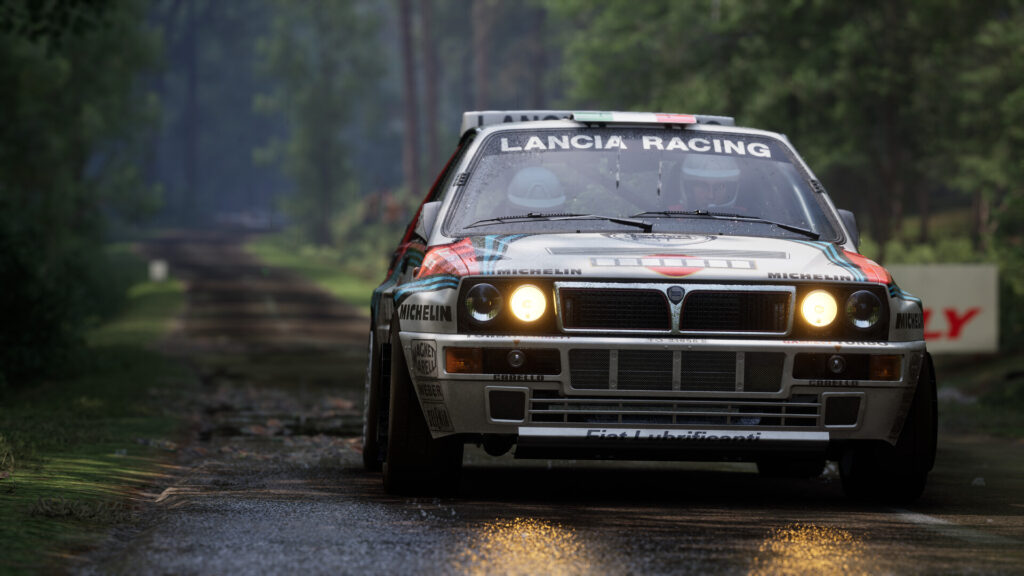
Lancia Delta HF integrale EVO
The cover star for Assetto Corsa Rally, it’s hard to find many other pieces of rallying royalty that evoke as strong a sentiment from rally fans as a Martini-liveried Lancia Delta.
The HF integrale EVO was the final update to the car that defined the early Group A era of the WRC, winning the Manufacturers’ title with legendary names such as Juha Kankkunen, Didier Auriol, and Andrea Aghini taking wins on the way – Lancia’s sixth consecutive triumph in the category. It was a run that saw Lancia also win 4 Drivers’ titles in various generations of Delta, before they withdrew full works backing at the end of the season.
Boasting 300hp and a 6-speed gearbox, the Delta traded titles and drivers with Toyota’s equally iconic Celica GT-Four before the arrival of Subaru and Mitsubishi in the mid-1990s. This legendary Italy vs. Japan rivalry has been immortalised over the years in many different forms, perhaps the most iconic being SEGA Rally Championship.
Subaru Impreza S3 Group A
First introduced in 1993 to replace the ageing Legacy, the Impreza is arguably the car that made Colin McRae. The 1993 version allowed him to win his first rally, the sweeping gravel highways of Rally New Zealand, which he would go on to win three times in a row up to 1995, and also historically set him on the path to becoming the then-youngest World Rally Champion in the 1995 version of the car.
Decked out in the famous blue and yellow with the “L555 BAT” plate to boot, a contrast between the heyday of tobacco advertising and the changing times that started to outlaw it, this four-wheel-drive 300-horsepower machine helped cement the Stars of Pleiades as rallying royalty.
This car is agile thanks to the development work carried out by Prodrive to innovate with the cutting-edge technology, and has a rather unique power unit thanks to the Boxer layout of the engine. Whilst the Lancia Delta HF integrale EVO features some layovers of the chaos and guesstimates of Group B rocket science, the Impreza sets you on the path to the high-tech sci-fi hijinks of the World Rally Cars.
Group B
Group B is best remembered as pure unadulterated chaos. Manufacturers put big budgets and even bigger engines in cars that were essentially prototype race cars, with plucky rear-wheel-drive underdogs against the four-wheel-drive behemoths.
Lancia Rally 037 EVO 2
The last 2-wheel-drive car to win a top-level World Rally Championship title, Lancia’s 037 was a rear-wheel-drive Group B monster that had to compete against new-fangled four-wheel-drive technology pioneered by Audi and their legendary Quattros.
With roughly 320hp all going to the rear wheels, the 037 was still competitive as late as the final season of Group B in 1986, where it got a podium on the Safari Rally with Markku Alén as the four-wheel-drive Delta S4 was deemed too fragile to survive the marathon event. It is perhaps best remembered for the 1983 title that it claimed, immortalised in documentary form thanks to Jeremy Clarkson’s loving tribute on The Grand Tour and in film thanks to 2024’s Road to Glory: Audi vs. Lancia starring Daniel Brühl.
Group 4
Before Group B and Group A, there was Group 4. Lightweight and nimble machines, usually rear-wheel-drive at the time, they were famous for their powerslides in the early days of the World Rally Championship.
Alpine A110S
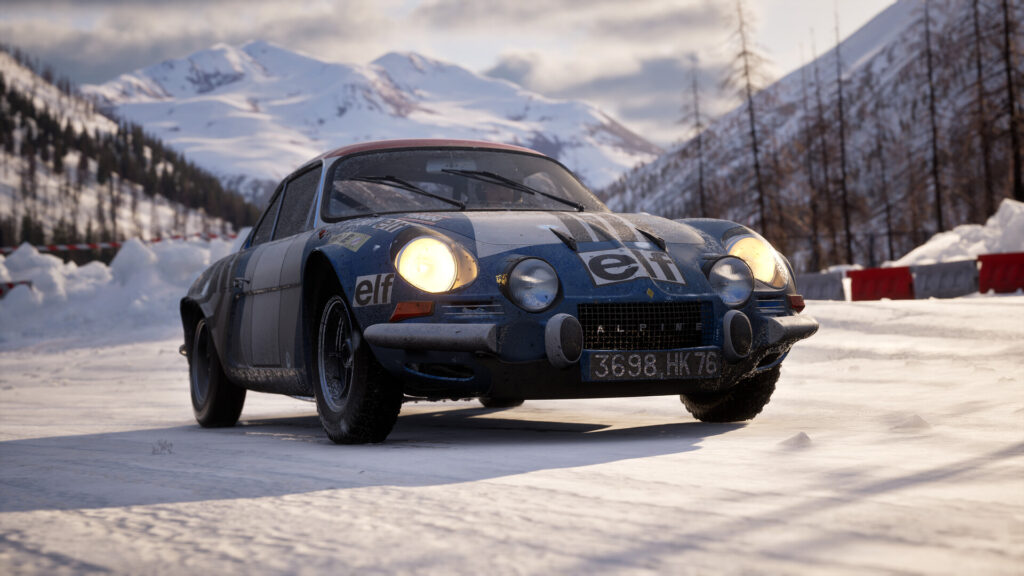
The inaugural WRC rally winner, sweeping the podium at the Rallye Monte Carlo in 1973 on the way to claiming the first Manufacturers’ Title in the sport’s history, Alpine’s A110S is an icon from the fledgling days of the World Championship.
Powered by a 1.8L engine that pops out around 185hp, a manufacturer best-known today for its forays on the tarmac circuits of the world was equally as competitive from the snow and ice of the Monte to the deserts of Morocco. Those big chunky tyres might look slightly out of place on something that looks so slick and elegant, but regardless of the surface, you will find that this icon is in its element.
FIAT 131 Abarth
Twice a winner of the WRC’s Manufacturer’s title, and likewise the Driver’s honours (although 1978’s feat was called the FIA Cup for Drivers), FIAT’s late-Group 4 machine picked up 20 wins between 1976 and 1981. This included a first win for a woman in the WRC with Michèle Mouton’s Tour de France Automobile triumph in the 1978 Cup for Drivers.
The 131 Abarth is one of few cars to have had 3 iconic liveries – the Alitalia livery featuring in Assetto Corsa Rally. It was also an example of the extremes some teams went to get a competitive advantage, with some FIAT 131 Abarths seeing the co-driver positioned in the middle of the car for better weight distribution! With roughly 230hp going to the rear wheels from a 2-litre engine, it traded championships with the equally famous Ford Escort Mk2 until Audi’s Quattro started the four-wheel-drive revolution in the 1980s.
FIAT 124 Sport Abarth Rally 16V
A rally car as old as the World Rally Championship itself, the FIAT 124 Sport Abarth Rally 16V competed in the inaugural WRC back in 1973. FIAT finished second behind the Alpine-Renault A110 that season, but the 124 managed to win Rajd Polski – the Polish event famous for only having 3 finishers, with Achim Warmbold’s 124 winning by over 2 hours!
With 215hp going to the rear wheels, the Abarth-tuned 124 Sport was able to be capable and competitive until the arrival of the 131 later in the decade. It was able to win handily in the European Rally Championship in 1972, though it was later overtaken by FIAT Group’s stablemates in Lancia.
Lancia Fulvia Coupé 1.6 HF
Lancia’s Fulvia is often seen as the manufacturer’s first foray into rallying dominance. A predecessor to the legendary Stratos, it not only dominated the International Championship for Manufacturers in the year prior to the inaugural World Rally Championship but also managed an impressive run of 8 from 9 Italian Rally Championships between 1965 and 1973.
Front-wheel-drive and powered by a 1.6-litre front-mounted engine, this rallying legend is also lightweight, as it clocks in around 800kg. You may find it a good step up from the similar-looking Alfa Romeo GTA 1300 Junior in the Group 2 class, as both are coupe bodies with similar power-to-weight ratios and are both front-engined and front-wheel-drive.
Lancia Stratos
The mid-engined V6-powered legend of the WRC hardly needs an introduction, especially decked out in its equally iconic Alitalia livery. It bridged the gap between FIAT’s two Group 4 machines of the 124 and 131, sweeping WRC titles between 1974 and 1976.
The Stratos is equally famous for the fact that its V6 was actually developed by Ferrari. Legend goes that Enzo himself only signed off on it because it was for a rally car, not wanting the Stratos to beat his Scuderia in circuit competition. The Stratos was able to win rallies as late as 1981, with Bernard Darniche picking up the Tour de Corse that year in a season defined by the meteoric arrival of the Audi Quattro.
Group 2
Before Group 4, there was Group 2. A shared formula with touring cars of the time, Group 2 cars were typically very lightweight front-wheel-drive cars with smaller engines than the bigger Group 4 cars.
Alfa Romeo GTA 1300 Junior
Much like you will find with its comrades in Group 4, Group B, and Group A, the Alfa Romeo GTA 1300 Junior is a versatile car that bridges several different racing categories from rallying to touring cars. And it does this with a 1.3L engine pumping out around 165hp.
As can be the case with Group 2 rallying, the front-wheel-drive GTA 1300 Junior is incredibly lightweight at only 760kg. This means that it is quite nimble and doesn’t struggle much with understeer despite being built in the days before power steering became commonplace.
Mini Cooper S
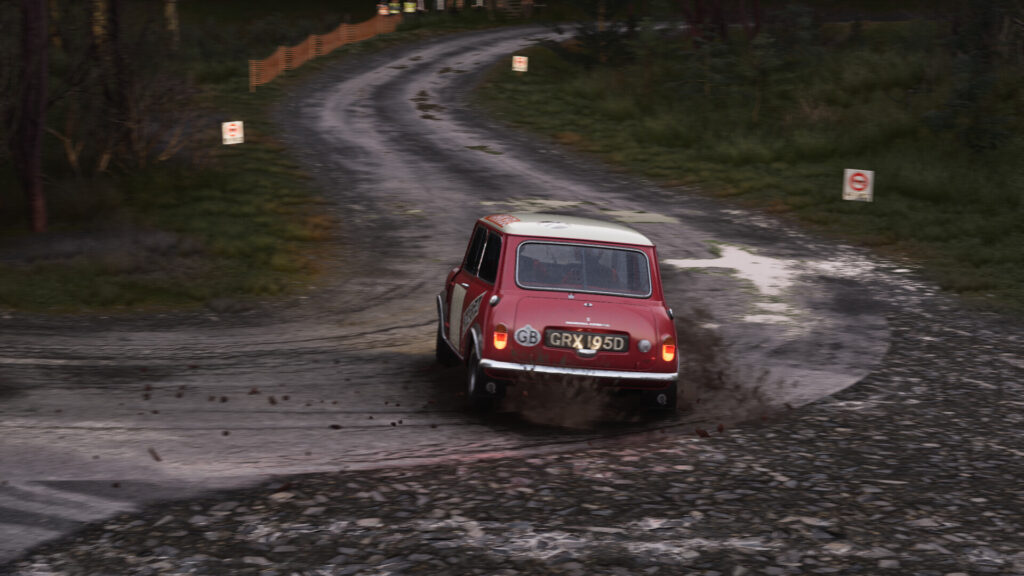
How can a rally game include classic cars and not include a Group 2 Mini? From The Italian Job to Monte Carlo mastery, this icon of the automotive sector is also a rallying legend in its own right.
The Group 2 Mini would win essentially anything it could get its hands on. It won the Monte Carlo Rally 3 times in 4 years, only stopped by disqualification in 1966, and capable drivers such as Pat Moss, Paddy Hopkirk, Timo Mäkinen and Rauno Aaltonen helped it to European Rally Championship honours in the days before the WRC as well as many national series honours. And that’s without talking about the tin-top honours it had in Touring Cars!
The Mini’s 1.3L engine often produced slightly less power than its rivals at 115hp, but it being so small and weighing only 620kg meant that it was nimble enough to outmanoeuvre its bigger and beefier opposition.
Setup IQ, AI Coaching, Telemetry Data, Leaderboards, Never Lift and Video Analysis - all in Delta for Le Mans Ultimate, iRacing, ACC and AC Evo. Everything you need to win and get faster as a driver in one subscription.